
The story: Origins
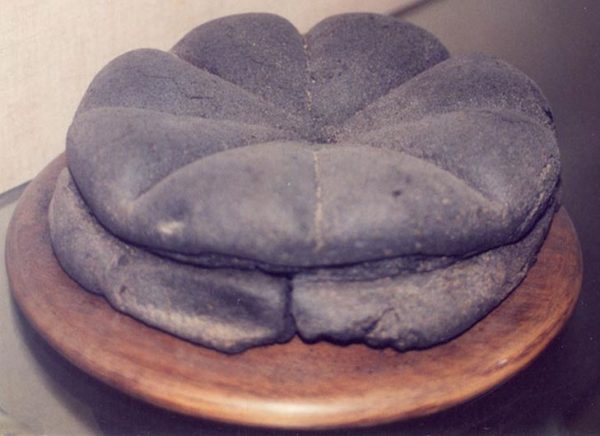
According to experts, the first written record of the word “pizza” or its variant “pizze” dates back to 997 A.D, appearing in a property deed discovered at Gaeta within which the cleric Bernardo gifts a mill in Garigliano to spouses Merco and Fasana. The document is in Latin and reveals that the tenant of the mill must give the landlord “twelve pizzas and a pig at Christmas and twelve pizzas and two hens at Easter”. Many historians claim that the word pizza was used generally to mean oven baked goods. Without any doubt the “duodecim pizze” (twelve pizzas) referred to in the document Codex Diplomaticus Cajetanus shows that in 997 A.D the word pizza was already in everyday use. Up until the end of the 1700s the word pizza was used as a synonym of pie or flat bread.
In the photo a Focacius found in an oven in the city of Pompeii.
The first time we see the appearance of the word ‘pizza’ in Naples is at the wedding of Bona Sforza and King Sigismund I, held at Capuano Castle around the year 1500. However, it refers only to a simple focaccia.
Salvatore Giacomo also noted this memorable banquet which lasted nine hours and included 29 courses making for a total of 1500 different dishes.
Specifically, the text says: eighteenth course – White pizzas recipe unknown; twenty-fourth course – Pagonazze pizzas believed to be prepared in a similar way to the white pizzas mentioned before, but red in colour (not tomato).
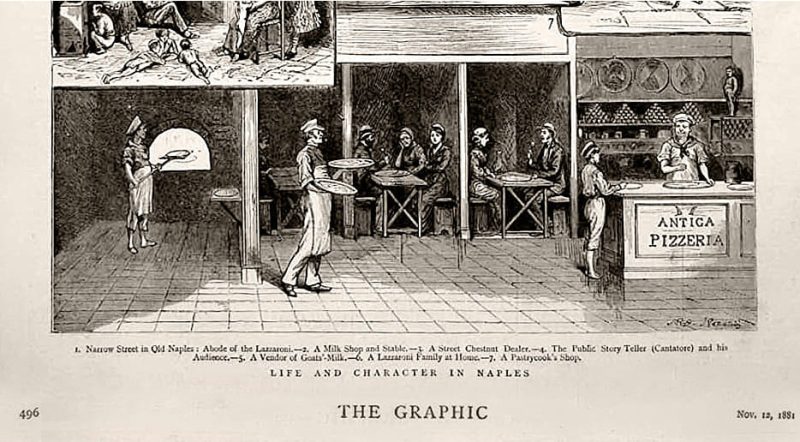
The Graphic of November 12, 1881
In 1588 Marquis Gian Battista del Tufo began writing a manuscript entitled “Ritratto o modello delle grandezze, delitie e meraviglie della città di Napoli” or “A portrait or model of the wonders, delights and marvels of the city of Naples”. In chapter eight – “On wine and cherries”, he writes about “l lasagni, le pizze o i gravioli, con la pasta gentil de mostaccioli” or rather lasagna, pizzas and ravioli with “mostaccioli”, a type of spiced biscuit.
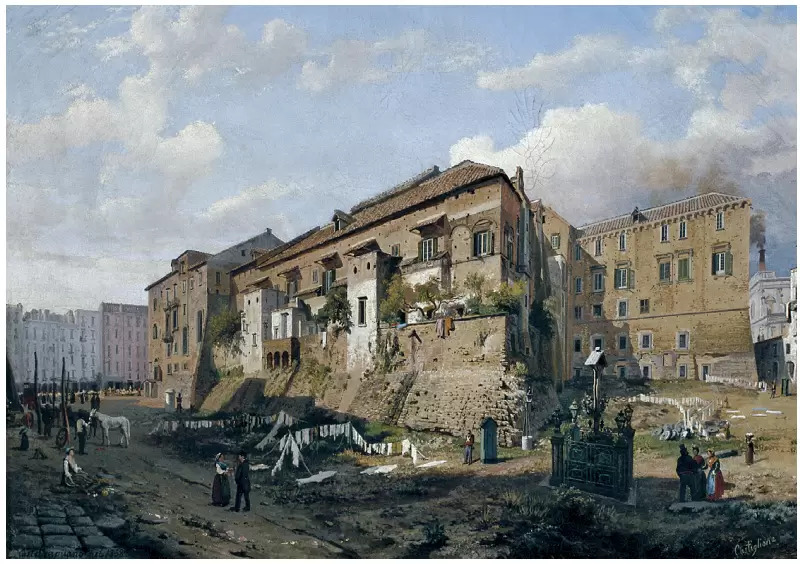
Neapolitan pizza was born at the moment where we begin to see shops selling pizza come into existence. Artwork from the period helps to reconstruct this timeline.
The first application for permission to bake pizzas and focaccia comes from a pizza shop. Dating back to 1792 and under the name of one Signor Giuseppe Sorrentino, the document highlights the role of the pizzaiolo, or pizza chef, in society and marks him out as a craftsman.
In 1799, a pizza chef wrote a letter to the constabulary asking that his debt be cancelled. The letter claimed that the pizza chef Gennaro Majella was unable to repay his debts due to the fact that his pizzeria had closed down in the wake of political unrest in the city.
This letter is particularly important because it demonstrates that at the time the pizzaiuolo or pizza chef was recognized as a skilled profession. Even before 1799, pizzaiuolo was a respected trade and so it is difficult to believe that anyone would open a pizzeria in a poverty-stricken area considering the investment required, for example in the construction of an oven.
A census dating back to 1807 counted 55 pizzerias in existence in Naples. What’s more, a few years later in 1871, this number had increased to 120.
At the time of the Majella letter Naples was a city plagued by unrest, with a very high population density and half of the inhabitants living in poverty. Life was hard and uncertain, but the people of Naples survived thanks to their great ingenuity.
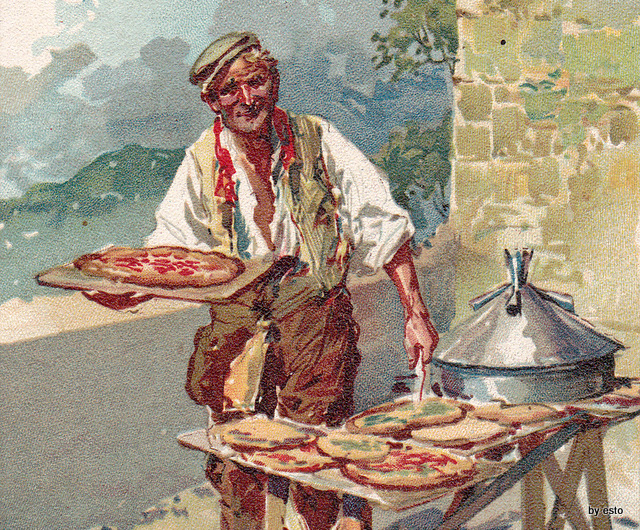
Museo della Pizza. Il Pizzaiuolo
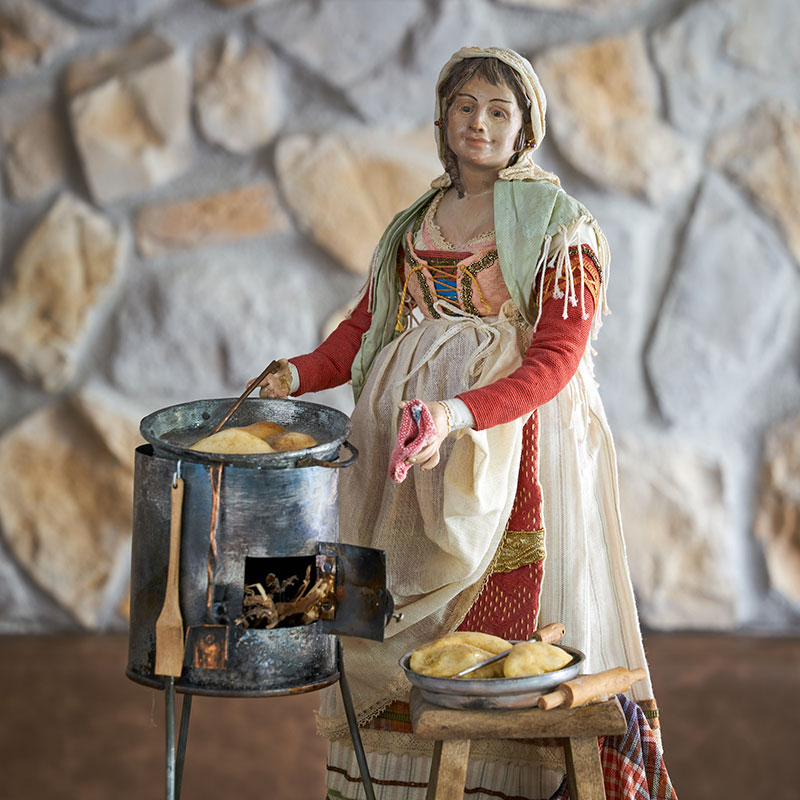
As we know from the 1799 letter and 1809 census, pizzerias already existed at that time. However, there were also travelling pizza vendors. They sold fried pizza on the streets, which required only a small hob and pan full of oil. In addition, there were pizzas with toppings baked in the oven. Obviously to make these a premises with an oven would have been necessary. We might assume then that early pizzerias were more like takeaways rather than restaurants. Usually, the pizza chef would have prepared the pizzas in the morning, then placed them in a special thermal container called a ‘stufa’ to keep them warm. He then would have entrusted them to an assistant who would sell them on the streets of the city.
“Take a piece of dough” are the instructions in Usi e Costumi di Napoli e contorni descritti e dipinti – “flatten it and roll it out with a rolling pin or the palms of the hands. Put on top whatever comes to mind, drizzle with oil or lard, bake it in the oven, eat it and then you will know what a pizza is. Focaccia and “schiacciate”” – it continues – “are something similar, but they are the very beginnings of the art”.
In any case, by the mid 19th century many people had heard tell of pizzas outside of Naples. What’s more, the 1800s were the golden age of the Grand Tour, the traditional trip undertaken by young European nobles in the hopes of boosting their general knowledge and culture. In fact, in 1811 in Il viaggio disegnato (The illustrated Journey), Aubin Louis Millin writes: “it tastes better with garlic or chopped tomatoes and one pours oil or grated cheese over it”.
Neapolitan pizza became an object of interest to Grand Tour travellers in part thanks to Goethe who, in his Viaggio in Italia stops over in Naples, exciting great interest throughout the rest of Europe.
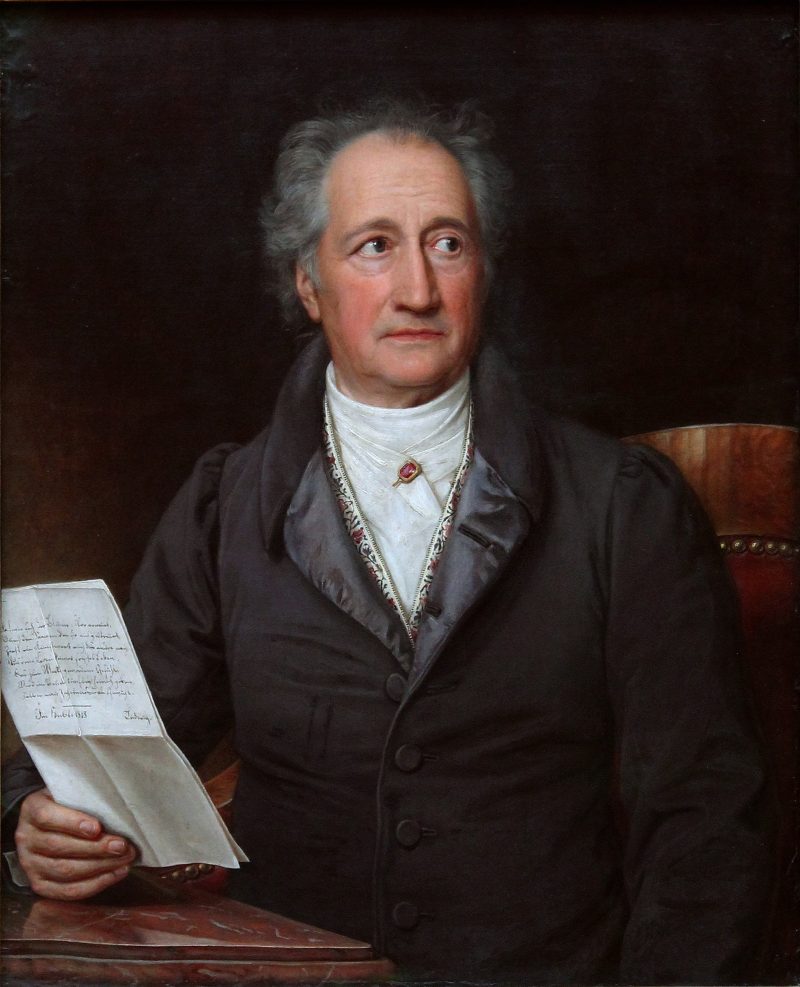
Johann Wolfgang von Goethe, portrayed by J. K. Stieler in 1828. Source Wilipedia
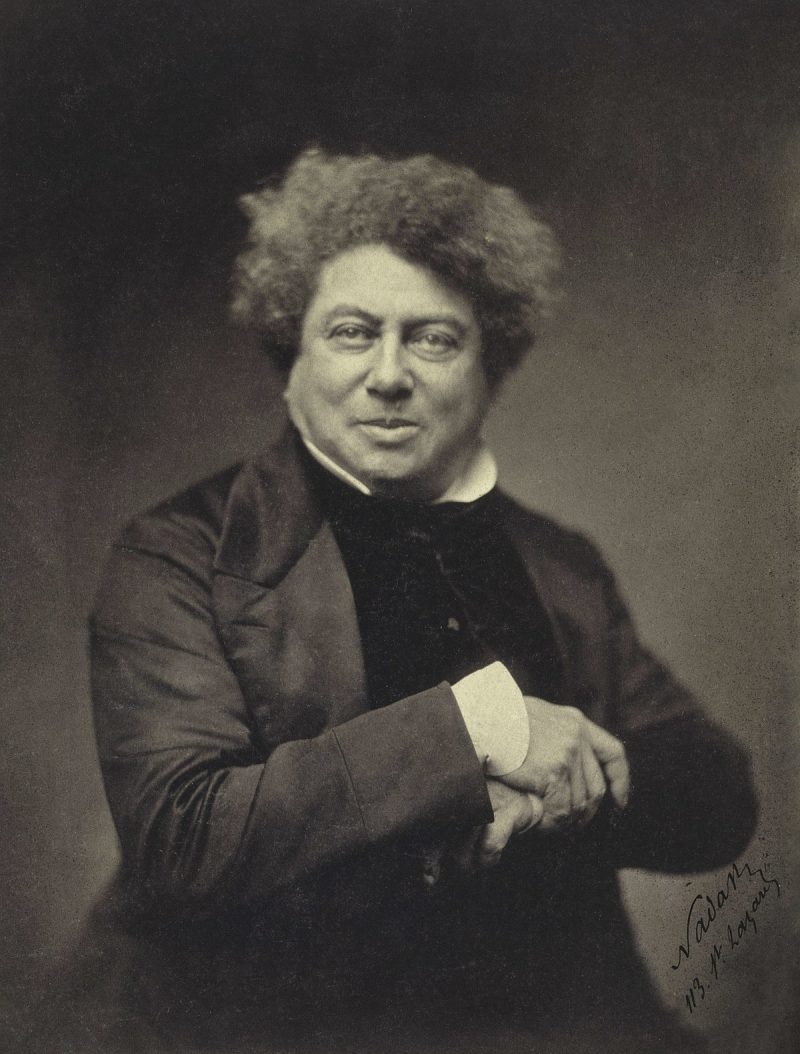
Alexandre Dumas. Wikipedia source
Con il Gran tour del 1835 anche Alexandre Dumas, autore de I tre moschettieri, arrivò a Napoli. Qui scrisse il Corricolo che fornisce un quadro realistico della vita in strada della città partenopea. “La pizza è una specie di schiacciata … è di forma rotonda e si lavora come la pasta del pane. Varia nel diametro secondo il prezzo. Una pizza di due centesimi basta ad un uomo, una pizza da due soldi deve satollare un’intera famiglia”, scrive Dumas. Fa anche un elenco dei condimenti più comuni: formaggio, pancetta, pomodori e piccoli pesciolini chiamati cicinielli.
“A prima vista la pizza sembra un piatto semplice – continua – sottoposta ad esame apparirà complicato …è il termometro gastronomico del mercato: aumento o diminuisce il prezzo secondo il corso degli ingredienti suddetti, secondo l’abbondanza o la carestia dell’annata”.
The Grand Tour of 1835 brought Alexandre Dumas, author of The Three Musketeers, to Naples. At the time his publication Il Corricolo painted a realistic picture of life on the streets of Naples… “it is round, and made of the same dough as bread. It is of different sizes according to the price. A pizza of two farthings suffices for one person, a pizza of two sous is enough to satisfy a whole family” Dumas writes. He also lists the most common toppings: cheese, pancetta, tomatoes and tiny fish called “cicinielli”.
“At first glance the pizza appears simple fare” – he continues “but on closer inspection it seems complicated… it is the gastronomic thermometer of the market: its price rises or falls depending on the ingredients used, and the abundance or scarcity of the year”.
In a collection of short stories in 1847 Gaetano Valeriani described the pizza as “a wheat dough, without yeast (sic) and so difficult to digest… sometimes it is topped with raw tomatoes, other times with fish or cheese.”
Carlo Collodi was completed disgusted by the pizza in his anthology written for schools in 1886. “That blackened burnt bread” he wrote “that pasty mix of garlic and anchovies, that greeny yellow of oil and fried herbs and those red bits of tomatoes thrown here and there give the pizza an air of mucky chaos”.
These texts are important because the first mentions fior di latte cheese and the second mozzarella cheese.
“Others are covered with grated cheese and drizzled with lard, and afterwards some basil leaves are strewn on top. To the first tiny fish are often added; to the second thin slices of mozzarella.”
Some make use of sliced ham, of tomatoes, of clams etc. others fold the dough over on itself forming what they call a ‘calzone’” as Francesco de Bourcard writes in Usi e costume di Napoli (1847).
An article which appeared in the London Chronicle in 1860 described the pizza as a ‘social leveller’. “In the pizzerias rich and poor mix in harmony” the article explains “they are the only places where members of the Neapolitan nobility, prouder than any other aristocracy in Italy, can be seen eating their favourite delicacy alongside their coachmen, valets and barbers”.
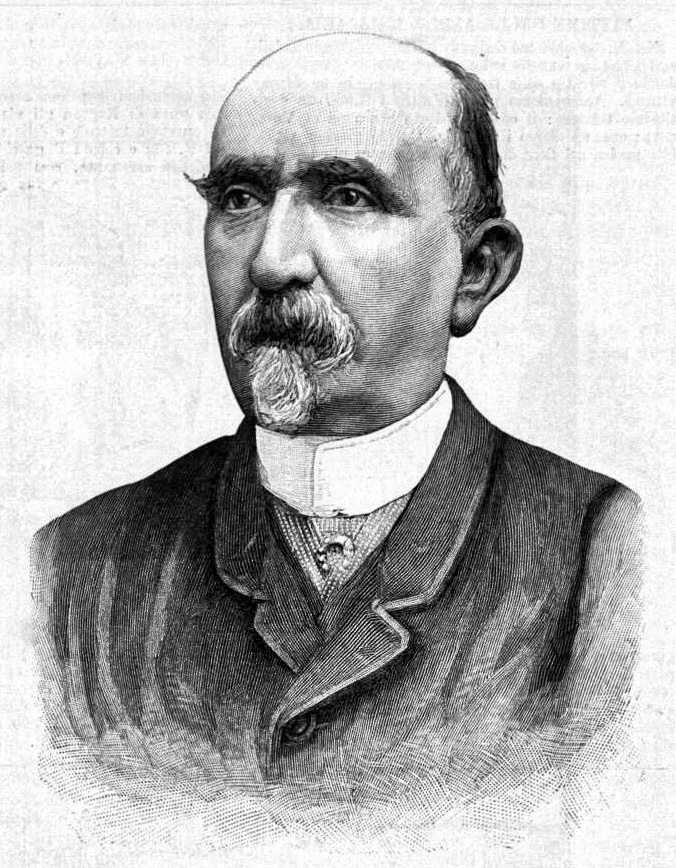
Carlo Collodi. Wikipedia source
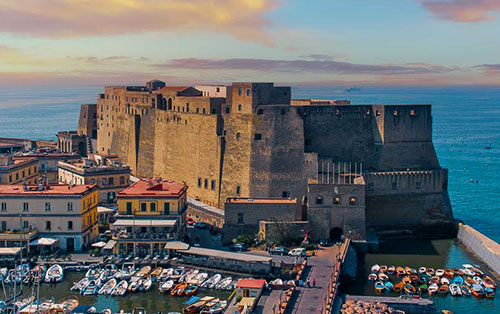
Castel dell'Ovo - Source: Alessandra Farinelli
By the beginning of the 1900s there were 127 pizzerias in Naples.
This was a period of mass migration: 3 million people left Campania alone headed all over the world. These people set themselves up as pizza chefs and cooks in order to survive, and dedicated themselves to the food industry despite not being skilled professionals or experts in the sector.
During the post-war period Neapolitan pizza left the borders of Naples and journeyed north with the industrial boom, taking with it the traditions and customs of its homeland.
Only in the 1980s did a dialogue open around Neapolitan pizza and the need to protect a traditional product of such great value. In 1989 the first Congress of Pizzaioli was held and on the 29 – 30th November 1995 we saw the very first International Conference of Neapolitan Pizza hosted at Castel dell’Ovo in Naples.